
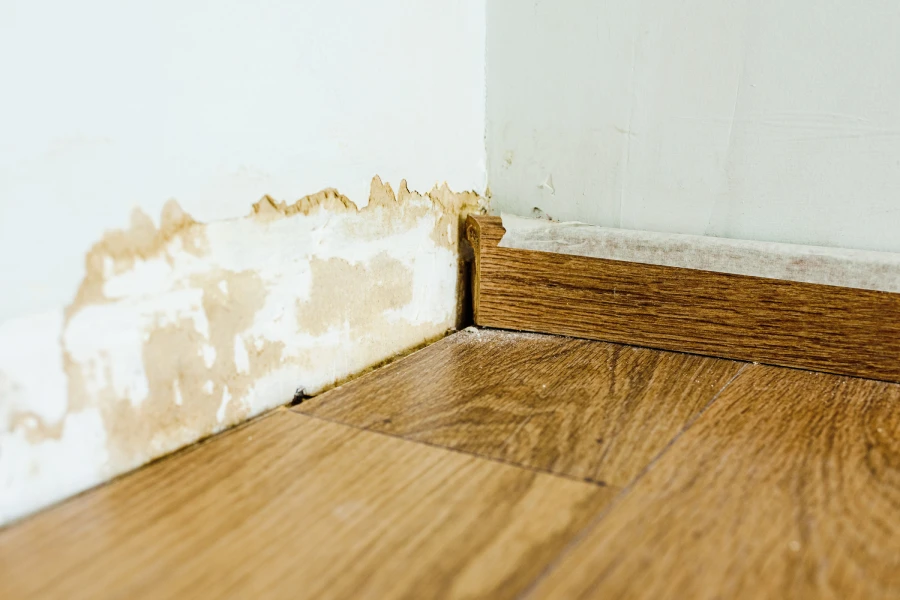
Act fast
Water spreads quickly under floors, so the first step is to stop the source. Shut off the water supply or clean up the spill before it seeps into seams or edges. Third Coast Flooring recommends moving furniture out of the wet area right away and using towels or a wet vacuum to pull up as much moisture as possible.
Assess the type of flooring
Different flooring materials handle water differently:
- Luxury Vinyl Plank (LVP): Fully waterproof, but water can still get trapped underneath. Dry the surface and check that the subfloor isn’t wet.
- Laminate Flooring: Can swell or separate if water reaches the edges. Wipe up immediately and use fans to dry the area.
- Carpet: Absorbs water quickly. Blot rather than rub, then use airflow and dehumidifiers to dry the padding. Third Coast Flooring can help determine if the padding needs replacement.
- Hardwood: Susceptible to cupping and staining. Remove surface water immediately and run fans to keep air moving until professional drying is possible.
Dry and ventilate
Once the standing water is gone, airflow is your best tool. Use fans, open windows, and run a dehumidifier to draw out hidden moisture. Third Coast Flooring suggests keeping air moving for at least 24 hours after cleanup, even if everything looks dry on the surface. Moisture trapped underneath can lead to mold or subfloor damage later.
When to call a professional
If water has soaked into seams, subfloors, or padding, or if it’s been sitting for several hours, a professional inspection is worth it. Third Coast Flooring uses moisture meters and specialized drying tools to check what’s happening under the surface. Getting ahead of the problem now saves time and money later.
Water and flooring don’t mix, but quick thinking can prevent long-term damage. Third Coast Flooring is always ready to help homeowners assess the situation, replace damaged materials, or recommend waterproof options for the future.